DTF Printing for Workwear: Can It Handle the Tradie Test? (Durability + Cost Compared)

Let's cut straight to it: if you're ordering custom workwear for your crew, you need prints that won't fade, crack, or peel after a few weeks on the job site. You've probably heard about DTF (Direct to Film) printing , it's the new kid on the block that's been making waves in 2026. But can it really stand up to the punishment of Australian tradie life?


Concrete dust. Sweat. UV rays. Industrial washes. High-vis gear that gets thrown in the ute every day. That's the real test.

ZZZZ BEST TEES has been running DTF prints through the wringer (literally) to see how they stack up against the old-school methods , screen printing and embroidery.

Here's what actually holds up when your team is out there grafting.

What Is DTF Printing, Anyway?

DTF printing transfers your design onto a special film, then heat-presses it onto the garment. Unlike traditional screen printing that pushes ink directly into the fabric, DTF sits on top as a flexible, thin layer that bonds with the material.

Think of it like a super-durable sticker that becomes part of the shirt : except it doesn't feel like a sticker at all. When done right, DTF prints are soft to the touch, stretch with the fabric, and resist cracking better than older heat transfer methods.

The big advantage? No minimum order quantities, full-color designs with zero setup costs, and it works on almost any fabric type. That's a game-changer for tradies who need small runs or frequently update their branding.

The Tradie Durability Test: What Actually Matters

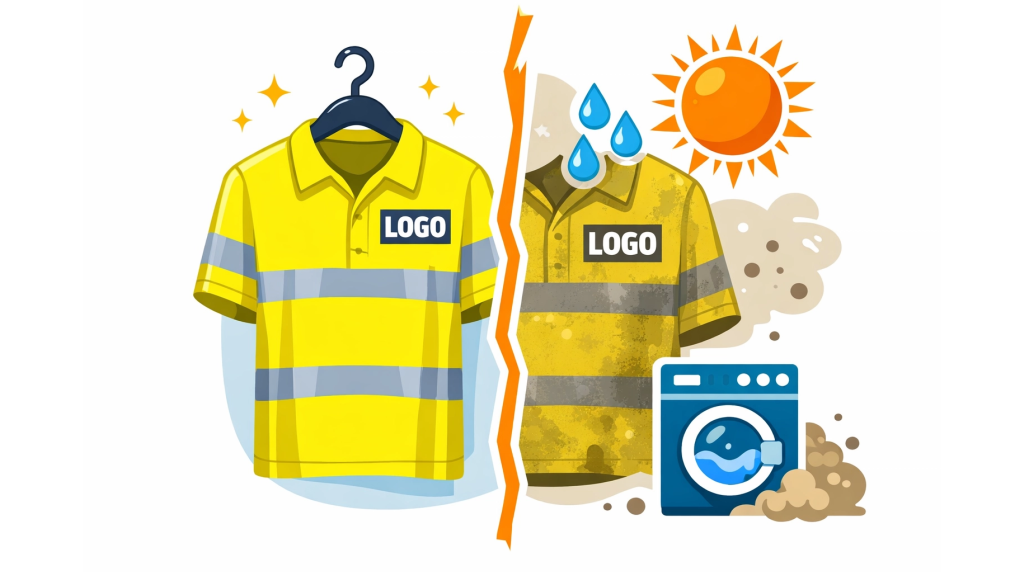
When ZZZZ BEST TEES tests workwear printing methods, the team doesn't just wash a shirt a few times and call it good. Real tradie gear faces:

  • 50+ industrial washes (hot water, heavy detergent, tumble dry on high)
  • Full-day UV exposure under the Australian sun
  • Abrasion from tool belts, harnesses, and rough surfaces
  • Chemical contact (paint, oils, solvents : the usual suspects)
  • Constant stretching and movement during physical work

The question isn't "Will it survive 10 washes?" It's "Will your logo still look sharp after three months of real-world abuse?"

DTF Wash Test Results: 50 to 100+ Washes

Here's the straight answer: DTF prints can last between 50 to 100 washes when applied correctly and cared for properly. That's solid durability for most workwear applications.

After 50 washes in testing, high-quality DTF prints showed:

  • Minimal color fading (especially on darker garments)
  • No peeling or lifting at the edges
  • Maintained flexibility without cracking
  • Print remained soft and comfortable

The catch? Application quality matters more with DTF than with screen printing. If the heat press temperature, pressure, or timing is even slightly off, you'll get premature peeling. That's why working with an experienced printer (like ZZZZ BEST TEES) makes all the difference.

For comparison, a well-executed screen print on cotton can easily hit 100+ washes before showing significant wear. Embroidery? That stuff is basically bulletproof : it'll outlast the garment itself.


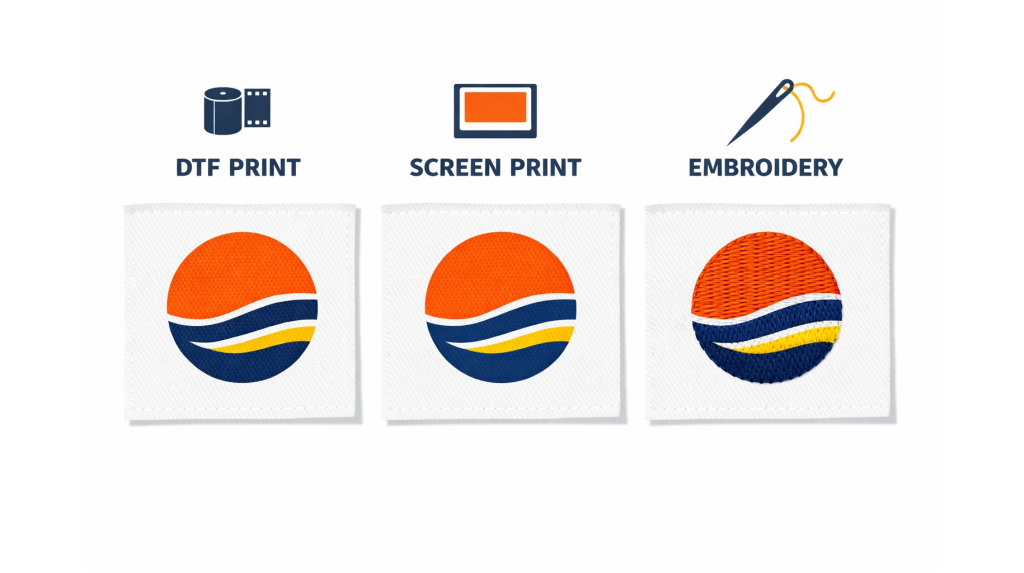
DTF vs. Screen Printing vs. Embroidery: The Honest Breakdown

Screen Printing: The Heavy-Duty Champion (For Pure Cotton)

Screen printing has been the workwear standard for decades, and for good reason.

Pros:

  • Longest lifespan on 100% cotton : plastisol ink bonds deep into the fibers
  • Vibrant colors that hold up under industrial washing
  • Cost-effective for large bulk orders (once setup costs are covered)
  • Tough as nails : can handle chemical exposure better than DTF

Cons:

  • High setup costs mean it's not viable for small orders (usually 50+ units minimum)
  • Limited color complexity : each color requires a separate screen
  • Doesn't work well on synthetics or performance fabrics
  • No flexibility for frequent design changes

Best for: Large uniform orders (50+ units) with simple 1-3 color logos on cotton or cotton-blend workwear.

Embroidery: The Premium Workhorse

Embroidery is stitching thread directly into the fabric. It's the most expensive option, but also the most indestructible.

Pros:

  • Unmatched durability : will never crack, peel, or fade
  • Premium look and feel : adds perceived value to uniforms
  • Works on any fabric type including heavy canvas, fleece, and hi-vis
  • Best for small logos on polos, jackets, and caps

Cons:

  • Most expensive per unit due to labor and machine time
  • Not suitable for large or detailed designs : small text can be hard to read
  • Can feel stiff or scratchy on lightweight garments
  • Slower turnaround times compared to printing methods

Best for: Small logo placement (like left chest on polos), corporate workwear where longevity and prestige matter, and outerwear like jackets.

DTF Printing: The Flexible All-Rounder

DTF sits right in the sweet spot between screen printing and embroidery for 2026 workwear.

Pros:

  • Works on cotton, polyester, blends, and performance fabrics : total versatility
  • Full-color designs with photo-quality detail at no extra cost
  • No minimums : perfect for small crews or trial runs
  • Fast turnaround : no screens to burn or threads to program
  • Soft hand feel : more comfortable than traditional heat transfers
  • Great for complex logos with gradients, fine lines, or multiple colors

Cons:

  • Slightly shorter lifespan than screen printing on pure cotton (but still 50-100+ washes)
  • Requires expert application : mistakes lead to peeling
  • Not quite as indestructible as embroidery for extreme conditions

Best for: Small to medium runs, complex multi-color logos, polyester or moisture-wicking workwear, and crews that update branding frequently.


Cost Comparison: What You'll Actually Pay

Here's where DTF really shines for most tradies.

Screen Printing:

  • Setup costs: $50-$150 per color (one-time charge)
  • Per-shirt cost drops dramatically after 50+ units
  • Best value at 100-500+ shirts

Embroidery:

  • Setup: $30-$50 digitizing fee (one-time)
  • Per-shirt cost: $8-$15+ depending on stitch count
  • Most expensive option per unit

DTF Printing:

  • Setup: $0 (no screens or digitizing required)
  • Per-shirt cost: Competitive from 1 unit to 100+ units
  • Same price whether you order 5 shirts or 50

Real-world example: For a crew of 12 needing hi-vis shirts with a full-color company logo:

  • Screen printing would require 50-unit minimum = expensive overstock
  • Embroidery would cost $10-12 per shirt minimum
  • DTF allows you to order exactly 12 shirts at a reasonable per-unit price with zero setup fees

For most small to medium businesses, DTF offers the best cost-to-flexibility ratio in 2026.


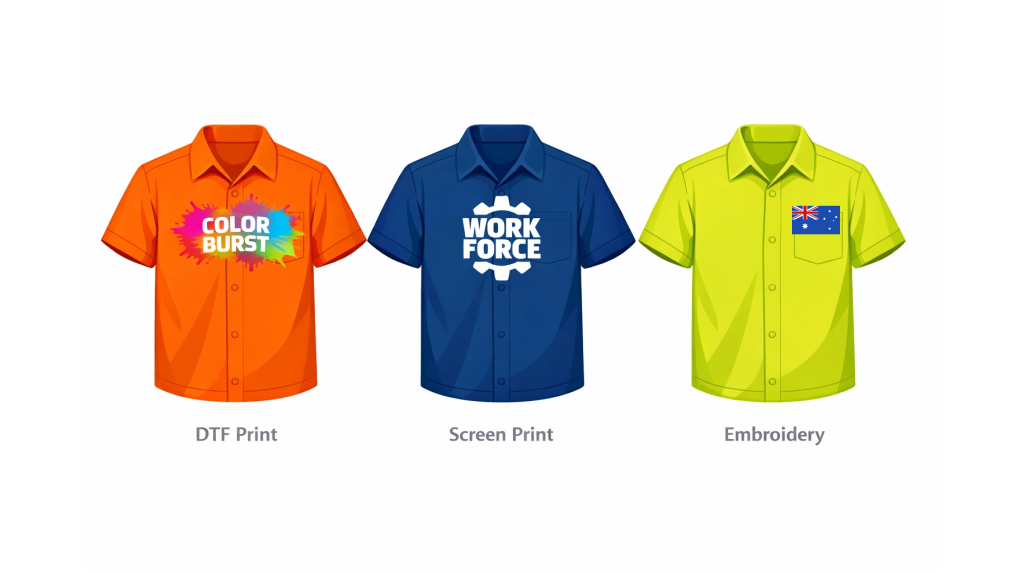
Complex Logos? DTF Wins Hands Down

If your company logo has gradients, fine text, shadows, or more than three colors, DTF is your only practical option without breaking the bank.

Screen printing requires a separate screen for each color : a six-color logo means six screens, six setups, and a hefty bill. Embroidery struggles with small text and fine details (anything under 3mm gets muddy or illegible).

DTF prints your entire design in one go, regardless of complexity. Photo-realistic images? No worries. Tiny text that needs to stay sharp? Done. Multiple colors blending together? Easy.

This makes DTF perfect for:

  • Franchise logos with detailed branding
  • Businesses that want to include website URLs or contact details on workwear
  • Teams that need individual names or numbers on each shirt
  • Safety messaging with icons and text combined

What Fabric Should Tradies Choose for Maximum Durability?

Here's the insider knowledge: the fabric choice matters as much as the printing method.

For DTF workwear that lasts:

  • Polyester and poly-cotton blends (60/40 or 50/50) are ideal : DTF bonds better to synthetics and the fabric itself is more durable for hard work
  • Moisture-wicking performance fabrics work beautifully with DTF (screen printing often won't bond at all)
  • 100% cotton is fine for DTF, but screen printing will outlast it in the long run if you're ordering 50+ units

ZZZZ BEST TEES stocks premium workwear-grade garments designed specifically for Australian conditions : think reinforced stitching, higher GSM (fabric weight), and materials that breathe in 40°C heat while standing up to daily punishment.


The Bottom Line: Does DTF Pass the Tradie Test?

Yes : with the right application and fabric choice.

DTF printing delivers 50-100+ washes of durability, handles complex logos beautifully, and offers unbeatable flexibility for small to medium orders. It's not quite as indestructible as screen printing on cotton or embroidery, but it's damn close : and for most tradie crews, the trade-off is worth it.

When you work with ZZZZ BEST TEES, every DTF print is heat-pressed at exact temperatures and pressures to ensure proper bonding. The team uses commercial-grade DTF film and adhesive powder : not the cheap stuff that peels after five washes.

If you're ordering 100+ pure cotton shirts with a simple logo, screen printing still makes sense. If you want embroidery's prestige and have the budget, go for it. But for everything in between : the complex logos, the small runs, the performance fabrics, the quick turnarounds : DTF is the 2026 workwear winner.

Want to see how your logo would look on DTF-printed workwear? Head to the ZZZZ BEST TEES design tool and mock it up in minutes. Or if you've got questions about durability for your specific use case, reach out : the team loves talking shop about what actually holds up on Australian job sites.